G052
User´s Guide
P
0.13 mm/rev
0.10 mm/rev
0.07 mm/rev
0.13 mm/rev
0.10 mm/rev
0.07 mm/rev
0.13 mm/rev
0.10 mm/rev
0.07 mm/rev
16
10
0
2
12
4
6
8
5
2
0
4
3
1
100
40
0
80
60
20
50
10
60
40 30
20
50
10
60
40 30
20
50
10
60
40 30 20
14
User ’s
Gu ide-
Techn i ca l Reference
Cut ting forces
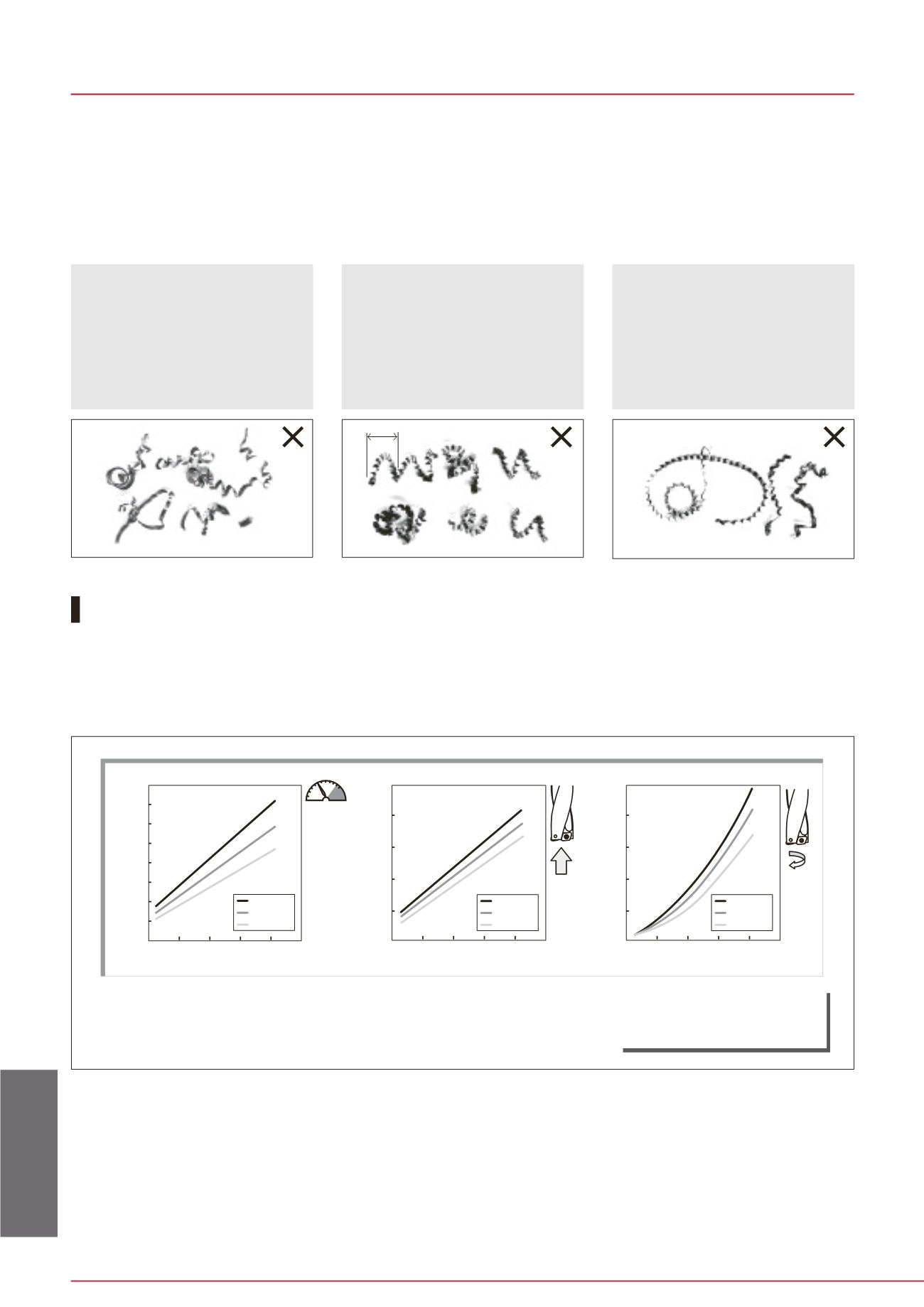
Chip shapes which tend to entangle and remedies against them
Apple-peel-like chips
These chips are often produced in
machining mild steels or low-carbon
steels at low-speeds and low-feeds.
Remedies
Increase the cutting speed in stages
by 20% within the range of standard
cutting conditions. If there is no effect,
increase the feed by about 10 % as
the cutting speed is raised by 20%.
Short-lead chips
These chips are often produced in
machining stainless steels at low-
feeds and tend to entangle to the
tool in spite of short length.
Remedies
Increase the feed by about 10 %. If
there is no effect, increase the cutting
speed in stages by 10% within the
range of standard cutting conditions.
Very long chips
Often produced in machining mild
steels or low-carbon steels under
improper cutting conditions.
Remedies
Increase the cutting speed in stages by
20% within the range of standard cut-
ting conditions. If there is no effect, de-
crease the feed by about 10 % as the
cutting speed is raised by 20%.
Apple-peel-like chips (Without curling)
Continuously curled “C” shape chips with short lead (P).
Continuously coiled long chips
Cutting speed:
v
c
= 100 m/min
Workpiece material: Alloy steel (JIS SCM440),
240HB
Cutting fluid: Used
Guidelines for cutting forces
The charts below show a guideline for cutting forces. Use TDX drills on a machine with ample power and sufficient rigidity.
Net power consumption (kW)
Thrust force (kN)
Torque (N·m)
Drill diameter (mm)
Drill diameter (mm)
Drill diameter (mm)
LOAD %
Dr i l l ing Tool s


