G039
User´s Guide
Tungaloy
r
ε
α
α
β
β
Rp
Rth
f
z
r
ε
Rth
α
β
f
z
f
z
SPCN42ZFR
0.03 ~ 0.08
User ’s
Gu ide-
Techn i ca l Reference
Roughness of f ini shed sur face
Improv ing sur face roughness
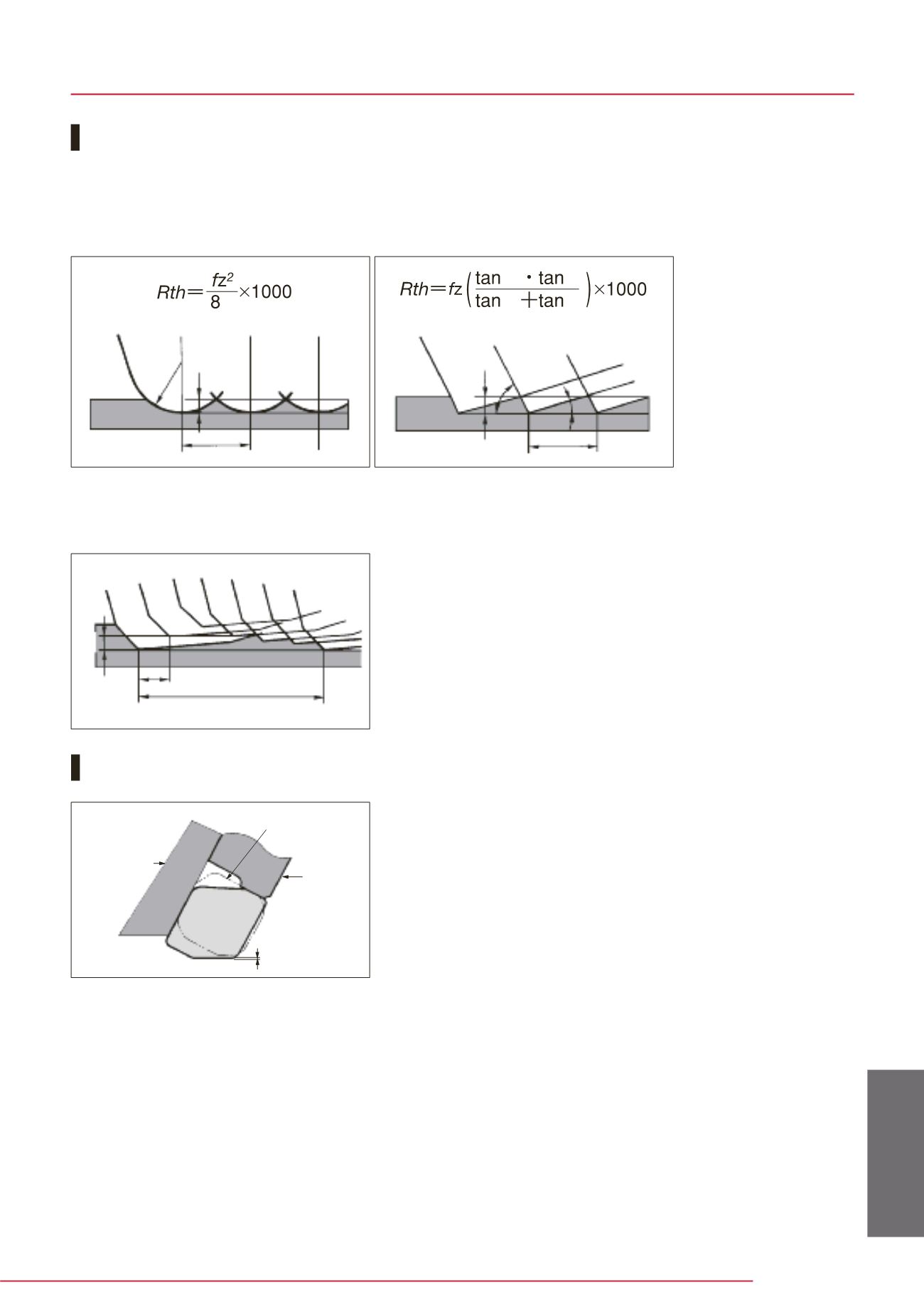
(1) Theoretical surface roughness
Theoretical roughness as shown below, is the same as for single point turning
Rth
: Theoretical roughness (µm)
f
z
: Feed per tooth (mm/t)
r
ε
: Corner radius (mm)
α
: Corner angle
β
: Face cutting edge angle
With corner radius
r
ε
Without corner radius
r
ε
(Feed per tooth)
(Feed)
(2) Practical surface roughness
In case of practical milling, there are many teeth and natural differences in
levels of edges occur. The maximum difference is called “run out”. (
Rp
)
In the actual face milling, finished surface roughness, as shown left, is
worse than the single point cutting. If only one tooth is projecting, it will be
similar to the single point shown above but of a large value substituting
f
(mm/rev) for
f
z (mm/t).
Face run out must be minimized and a low feed and high speed should be
used. Also, in order to attain good finished surface at high efficiency, there are
the following methods:
(1) In case of ordinary mill
Use wiper insert as shown in the figure at left.
(2) Use of super finish mill for finishing.
• Use of combination mills with finishing insert such as TFD4400-A and
TFP4000
1
A (
a
p
< 1.0 mm).
• Use of supe finish mill for finishing such as NMS cutters and SFP4000
etc.
Body
Insert
Locator
f
Mi l l ing tool s


