E062
2-e ective Drill
Notes:
• The above table shows standard and typical cutting conditions for
DMX - FM type drills.
• Because the cutting conditions may be changed depending on the
material type, hardness, machinability, machine tool, and coolant,
the most appropriate conditions must be decided whilst referring
the chip control condition and tool failure mode.
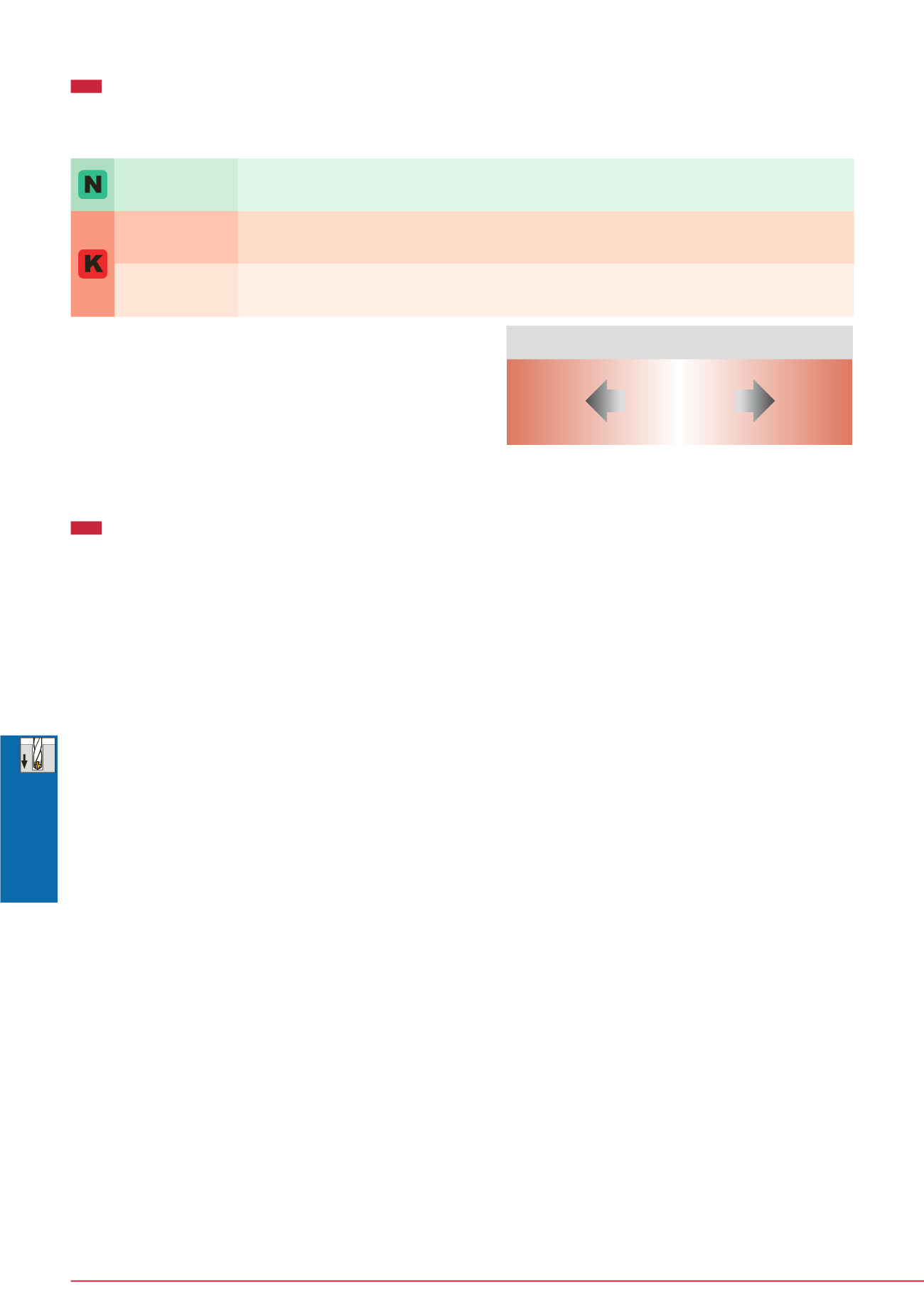
• When using the smaller side of the diameter range, the feed rate
should be set lower.
• When working with long overhang or using "L" type drills, the feed
rate should be set lower.
ISO
Workpiece
material
Cutting speed:
Vc (m/min)
Feed: f (mm/rev)
ø3 ~ ø5
ø5 ~ ø10
ø10 ~ ø16
ø16 ~ ø20
Aluminium alloys
60 - 120
0.2 - 0.4
0.3 - 0.5
0.4 - 0.6
0.5 - 0.7
Grey cast irons
40 - 80
0.15 - 0.35
0.25 - 0.45
0.3 - 0.6
0.35 - 0.65
Ductile cast irons
30 - 70
0.15 - 0.3
0.2 - 0.4
0.25 - 0.5
0.3 - 0.6
STANDARD DRILLING CONDITIONS
NOTE ON CUTTING FLUID
Feed
f
Low
High
Small dia.
L type
(Long)
Drill dia.
Overhang
of drill
Large dia.
S type
(Short)
• Cutting fluid should be sufficiently supplied to the drill point and the
entrance of the hole.
• Use a water soluble cutting fluid containing relatively high content
of extreme pressure additive for heavy duty cutting or use a water
insoluble cutting fluid.
• No. of revolutions (min -1 ) = Cutting speed
1000
3.14
Tool diameter
• Table feed (mm/min) = No. of revolutions
Feed per revolution


